Driveways and Turnarounds
Full-width surface cleaning from the street to the garage, with hand detailing at joints, curb faces, and the shaded edges where growth starts.
Concrete cleaning in Mint Hill, North Carolina
Mint Hill concrete has a specific set of problems: long drives and turnarounds that hold more square footage than a subdivision pad, tree cover that keeps slabs damp enough for algae to settle in, and leaf litter that leaves its mark well after it has been swept away. Carolina Surface Solutions is a mobile service — the equipment travels to the property as part of the Charlotte-area route, and there is no office in Mint Hill to visit.
Text us your photos, your address or neighborhood, and the surfaces you need cleaned.
On a wooded Mint Hill lot the driveway is often the largest single surface on the property, and it rarely dirties evenly. The open middle stretch picks up tire film and road grit, while the edges under tree cover stay damp and go green first. Turnarounds, parking pads, and the walk out to a detached garage add more concrete still, and each section may be in a different condition by the time anyone looks closely at it.
Cleaning is done with a rotating surface cleaner wherever the concrete allows it, rather than a narrow wand. Across a long drive that consistency matters more than anywhere else: a surface cleaner holds the same spray height and overlap from the street to the garage, which is what prevents the striping and wand marks that stay visible for years. Edges, expansion joints, and the transition into the garage are detailed by hand after the open field is finished, and areas with heavy organic growth get a pre-treatment with time to work before anything is cleaned.
Before water runs, the concrete is walked and read — the age and finish, whether it is broom-finished or exposed aggregate, how it drains, where the downspouts empty, and whether there is existing spalling, flaking sealer, or cracking that should be pointed out rather than washed over. That inspection sets the pressure, the cleaning solution, and what can honestly be expected from the result.
Plenty of Mint Hill drives run downhill to the street or sit on enough grade that runoff picks a route of its own. Where the rinse water goes is settled before the work starts, not discovered halfway through: the grade is followed, and planting beds, mulched areas, low spots, and anything at the bottom of the slope are identified first so the cleaning can be planned around them. Larger lots also tend to mean fewer spigots and sometimes a well, so water access and volume are confirmed in advance as part of the same conversation.
Cleaning and surface preparation are different jobs with different finish lines. Cleaning is judged by how the concrete looks. Preparation is judged by whether the next product will bond, so it has to leave the surface uniformly clean, free of cleaning residue, and dry enough for the sealer or coating that follows. When sealing is the plan, the work is scheduled around that timeline rather than squeezed in ahead of it — and on a shaded lot the drying window is longer than most people expect, which is worth discussing up front.
Surface by surface
Concrete, pavers, and brick hold dirt differently and fail differently when they are cleaned carelessly, so each one gets its own approach.
Full-width surface cleaning from the street to the garage, with hand detailing at joints, curb faces, and the shaded edges where growth starts.
Front walks and paths out to detached garages and sheds. Slick green film in a shaded stretch is a safety issue, not just a cosmetic one.
Cleaned with pressure suited to the finish, keeping runoff away from planting beds and the wooded edges of the yard.
Entries, walkways, and pads cleaned for appearance, or prepared to a residue-free, dried state when sealing or coating comes next.
The process
The surfaces are agreed on before the trailer is unpacked, and you see the finished work before we leave.
Questions about our methods are answered in more detail on the FAQs page.
We identify the material and finish, note existing cracks or flaking, confirm spigot locations and water supply, and check where the grade sends runoff.
A cleaning solution is applied and given time to work on algae, tannin, and traffic film, then the concrete is cleaned at a pressure the slab can take.
Edges, joints, and adjacent areas are rinsed clean of residue, then we walk the finished surfaces with you and address anything you flag.
Recent concrete and paver work
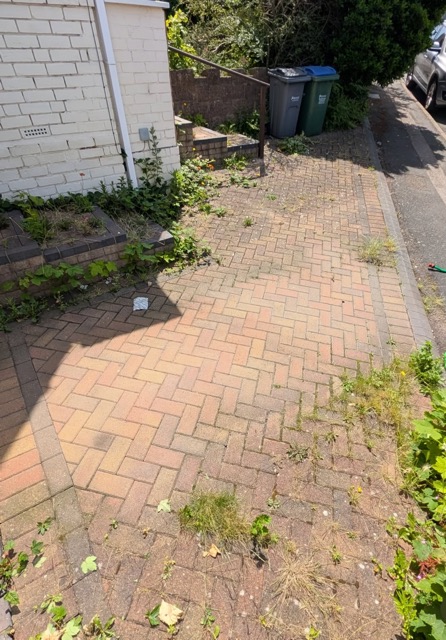
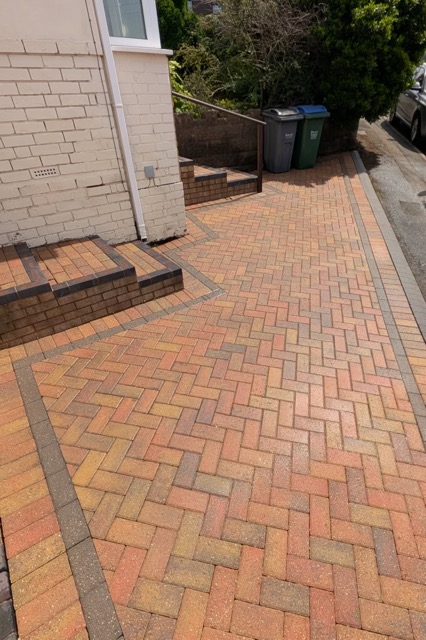
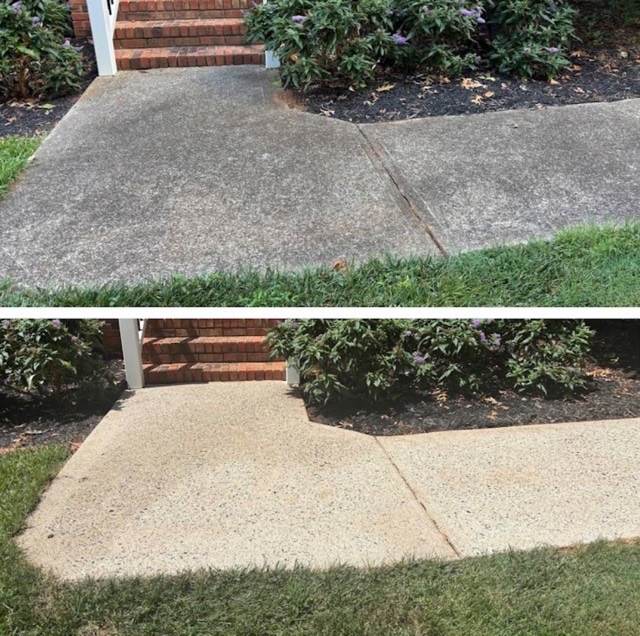
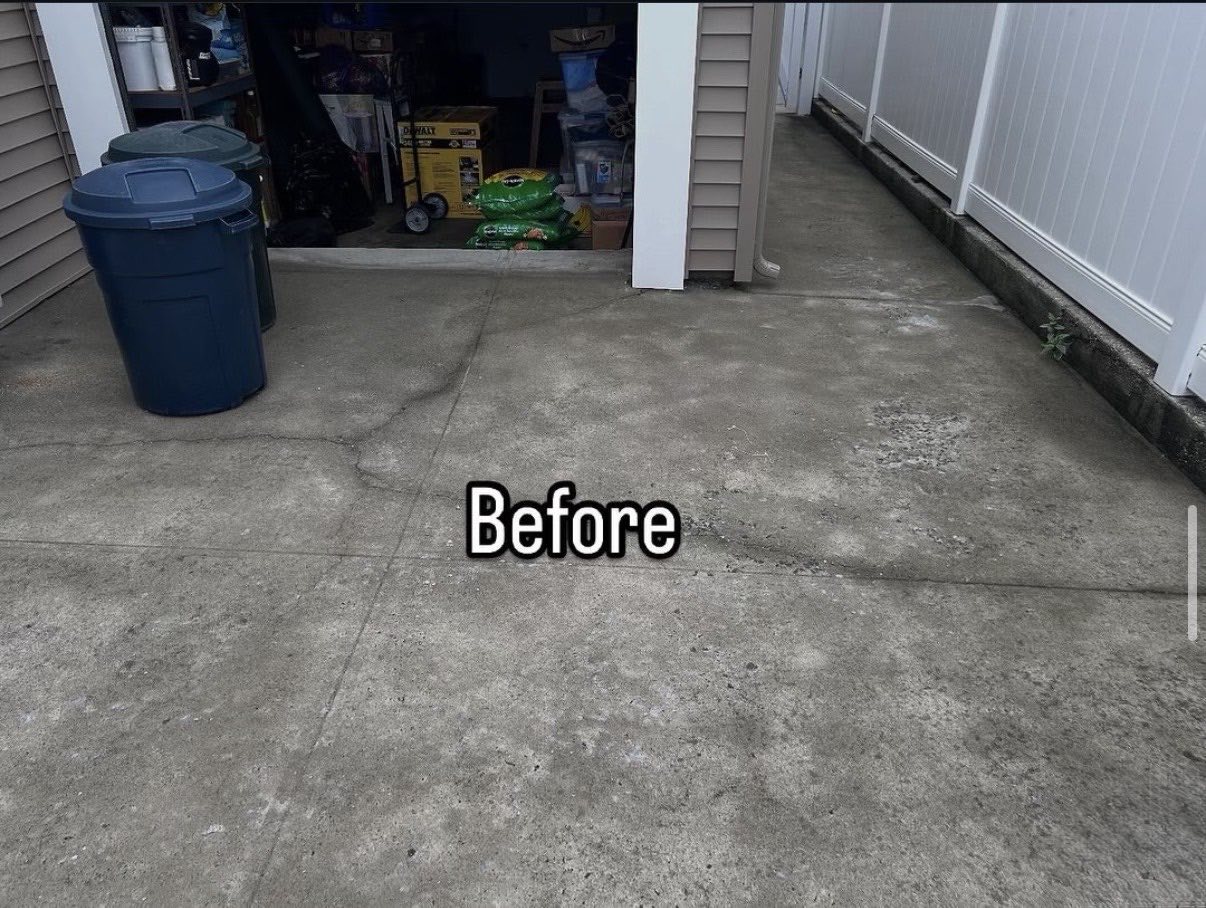
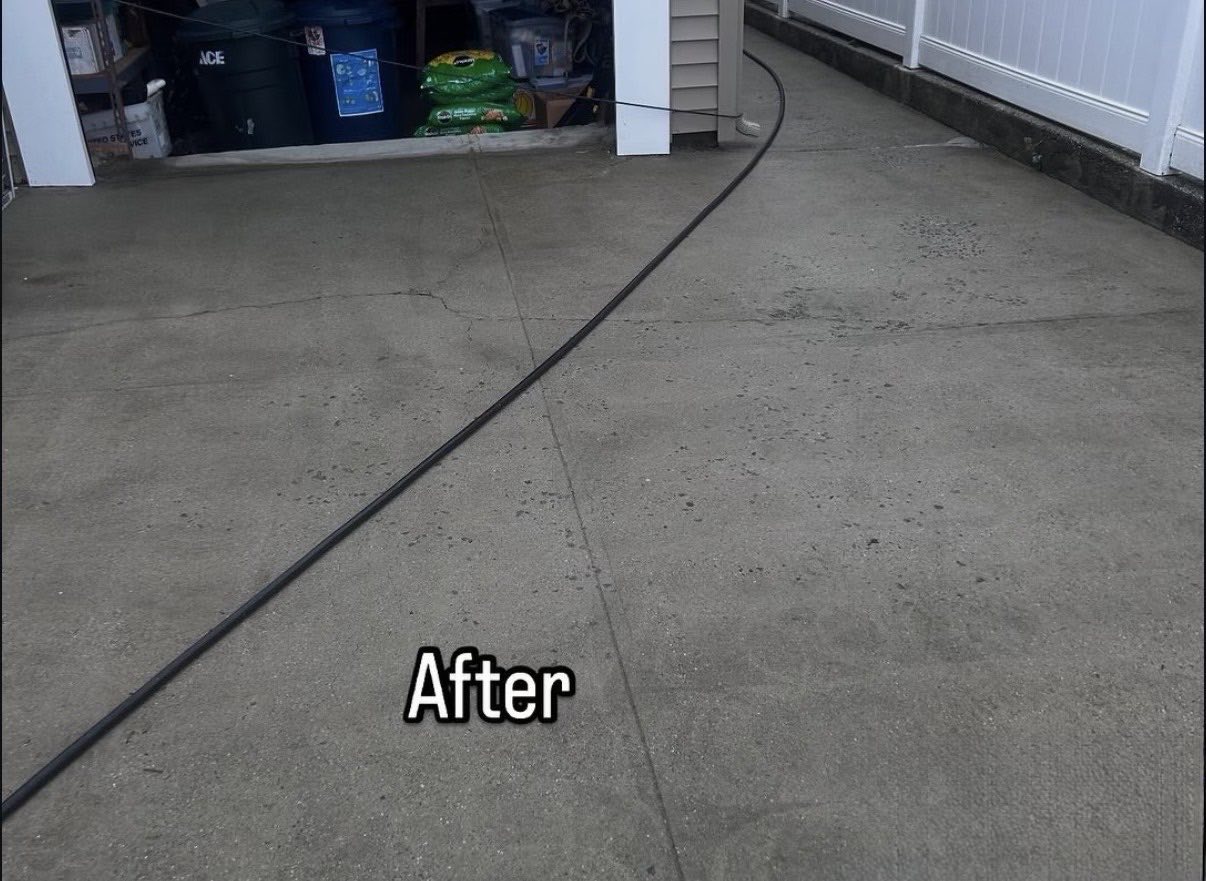
Charlotte-area cleanups on paver driveways, concrete walkways, and patios — the same surfaces and buildup we clean in Mint Hill.
Algae and the green film. Shade, humidity, and slow drying are the standard recipe on a wooded lot. It shows up first on north-facing walks, under tree cover, and along the strip where the driveway meets the lawn. It is the most common complaint here and usually the most satisfying to fix, because it sits on the surface and releases with the right solution and dwell time.
Leaf tannin and mulch runoff. Wet leaves left on concrete through a Carolina winter print their shape into the slab, and mulch beds bleed brown tannin onto adjacent walks every time it rains hard. Fresh tannin usually lifts well; what has soaked into older concrete tends to lighten rather than vanish.
Tire marks and traffic film. Road tar, brake dust, and rubber scuffing concentrate in the wheel paths and in front of the garage door. These respond to dwell time and the right degreaser far better than to raw pressure.
Oil, transmission fluid, and grease. Fresh drips often lift well. Old spots that have soaked into porous concrete may lighten significantly without disappearing, which is why they get pointed out during the estimate rather than promised away.
Pollen and seasonal grit. Spring pollen rarely rinses off evenly with rain. It binds with dust and settles into the pores, leaving a dull haze that a garden hose only redistributes.
Rust and irrigation staining. Fertilizer, metal furniture feet, and well or sprinkler water leave orange-brown discoloration that needs a specific treatment rather than more pressure, and results vary with how long the stain has been setting.
Where we work
There is no storefront to visit and no Mint Hill office — the equipment comes to the property, and coverage is based on drive time rather than a fixed address.
Mint Hill sits east of Charlotte in Mecklenburg County and much of it stayed wooded as it grew, which is why organic growth and leaf staining dominate the requests here. Neighboring Matthews shares the mature tree cover; newer subdivisions in Indian Trail lean toward crisp light concrete that shows every tire mark; and Charlotte proper brings a steady mix of residential drives and pedestrian-heavy commercial walkways. Coverage generally reaches communities within about 30 minutes — send your address and availability can be confirmed.
Common questions
Yes. Mint Hill is part of the normal Charlotte-area route, generally within about 30 minutes of travel. Carolina Surface Solutions is a mobile service, so the equipment comes to the property and there is no office in Mint Hill to visit. Call or text 704-498-7680 with the address and the surfaces you want cleaned.
Tree cover keeps concrete damp long after the rest of the property has dried, and shade plus humidity is what algae and mildew need to hold on. Walkways under mature trees and the shaded edge of a driveway are usually first. Growth like this sits on the surface and responds to a cleaning solution and dwell time rather than more pressure — the same principle behind soft washing on siding.
It usually improves a great deal. Wet leaves left on a slab through the winter can print their shape into the concrete, and mulch beds bleed brown tannin onto adjacent walks every hard rain. Fresh tannin generally lifts well, while staining that has soaked into older porous concrete may lighten rather than disappear. Anything unlikely to come out completely is pointed out during the estimate.
Length, slope, surface condition, and water access are all reviewed before the visit is scheduled, because a long drive with a turnaround is considerably more square footage than a subdivision pad. Cleaning is done with a rotating surface cleaner wherever the concrete allows it, which keeps the spray height and overlap consistent across a large area and avoids the striping a narrow wand leaves behind.
That is discussed before any water is turned on. On a sloped drive the runoff follows the grade toward the street, a culvert, or whatever sits at the bottom, so planting beds, mulched areas, and low spots along the route are identified first and the work is planned around them.
Move vehicles, trailers, planters, toys, and door mats off the concrete, and leave an outdoor spigot accessible. Point out irrigation heads, landscape lighting, low vents, and any areas that already have cracks or flaking so they can be checked first. If the property is on a well, mention it when you call, because water supply and volume affect how the work is planned.
Yes. Call or text 704-498-7680 with the property address, the surfaces on your list, and a few photos, or send the same details through the estimate request form. Photos of the staining usually make the quote faster and more accurate.